

 Contact us


- Support and Quality
Commitment to precision
- This section introduces some of the advanced product technologies that support high-precision measurement.
- Our gear measuring machines incorporate numerous high-precision components, including sliding surfaces and spindles, that make use of our core technologies: scraping, grinding, and polishing.

-
- Craftsmanship
- Scraping
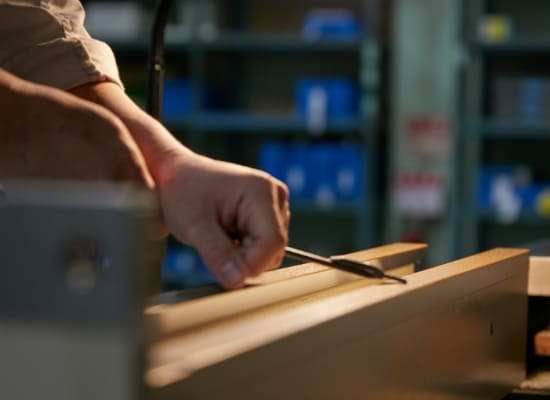
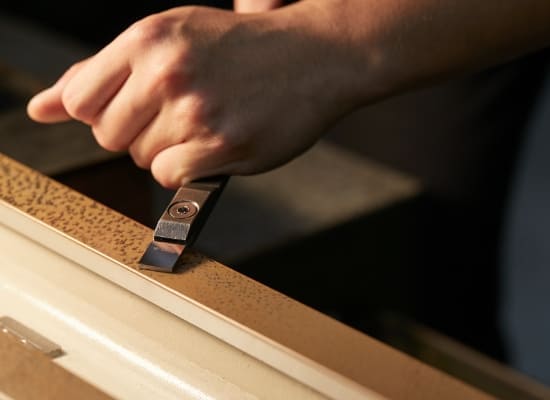
Scraping is a finishing process that uses a tool with a chisel-like flat tip to manually shave down protrusions and create an ultra-flat surface that cannot be achieved through machining alone. The microscopic dimples created by scraping act as “oil pockets” for lubricating oil, reducing resistance between metal surfaces, enabling smooth sliding, and extending machine service life.
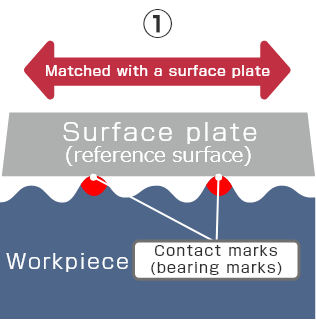
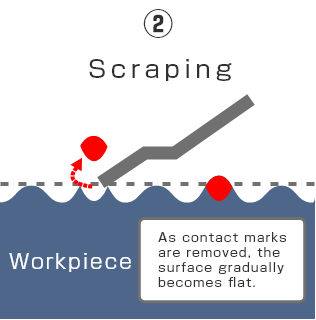
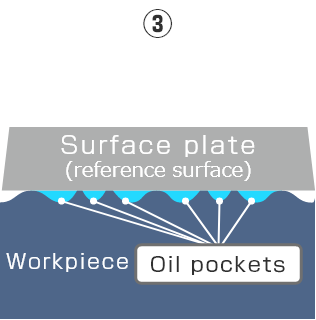
By applying scraping to the sliding surfaces of our measuring machines, we achieve high-precision straightness, flatness, and squareness during assembly.

-
- Pursuit of precision
- Grinding and polishing
Through grinding processes using cylindrical grinders, internal grinders, surface grinders, and thread grinders along with lapping (polishing) technology, we achieve the micron-level and sub-micron-level precision that’s required for high-accuracy component.
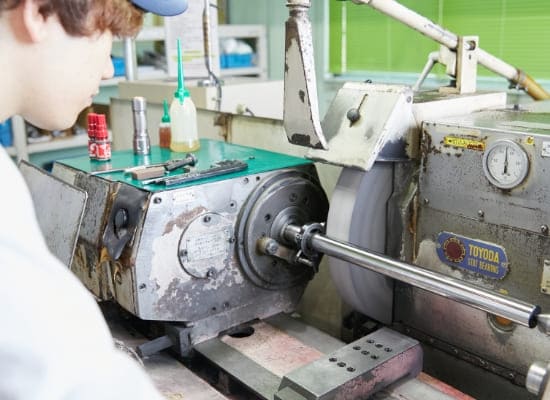
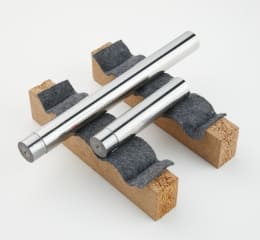
Test bars require sub-micron roundness accuracy, demanding high skill from the machinist.
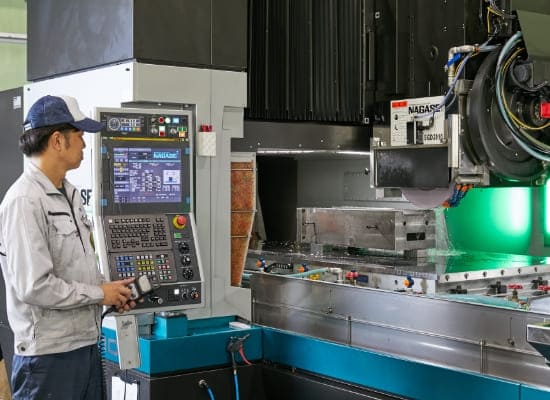
Installed an ultra-precision gantry surface grinder manufactured by Nagase Integrex. We work continually to enhance our machining technologies and equipment.
Calibration service initiatives
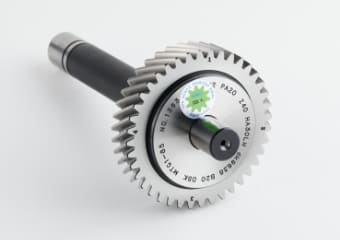
- TPR Osaka Seimitsu Kikai "Gear Measuring Center (GMC)" is accredited by the National Institute of Technology and Evaluation (NITE) as an International MRA accredited calibration laboratory under the JCSS scheme of the Measurement Act, covering block gauges, gears and On-site Calibration of gear measuring machines.
Our calibration services include master calibration and On-site Calibration of gear measuring machines.
 About JCSS calibration validity
-
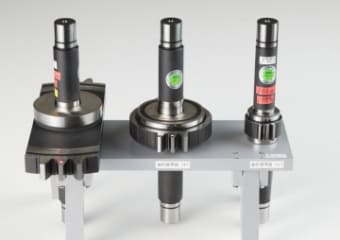
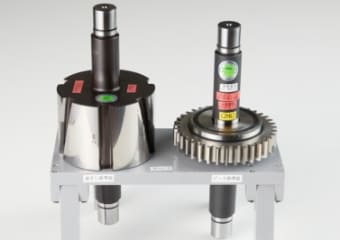
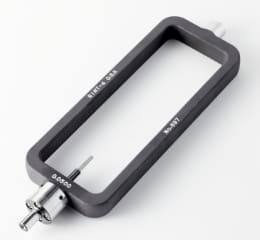
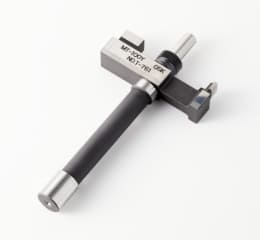
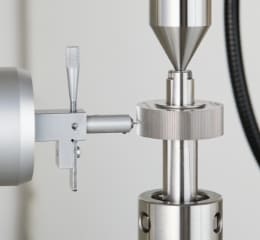
- Master calibration

-
- Differences between JCSS calibration and OSK (in-house) calibration for master gears
| Description | OSK calibration | JCSS calibration |
| Scope | Master gears, various masters, measuring instruments | Master gears, block gauges |
| Uncertainty | Not indicated | Indicated |
| Traceability diagram | Required | Not required |
| Issued documents | Inspection report Calibration certificate Traceability chart |
Inspection report Calibration certificate with JCSS logo |

-
- How to determine calibration intervals
Calibration service providers (including us) may not arbitrarily decide calibration intervals.

Calibration intervals must be determined by the user, based on the user’s own quality manual.
- What is traceability?
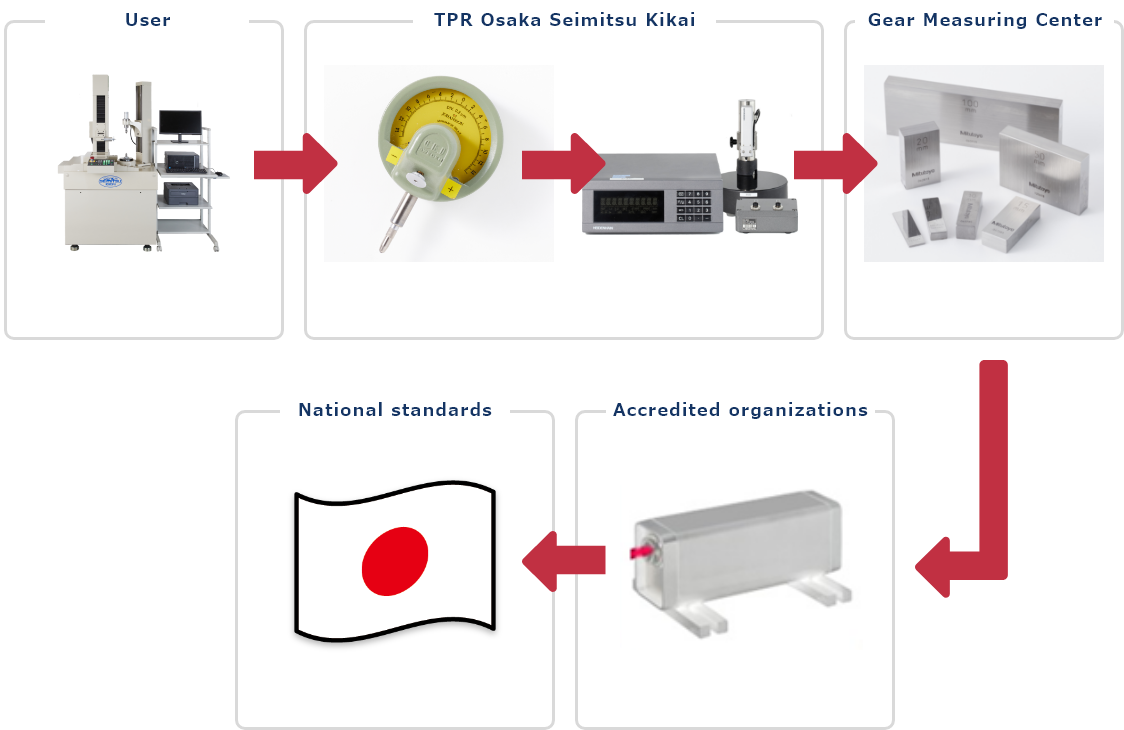
- Traceability means that the accuracy and quality of measuring instruments can be traced back to national standards through an unbroken chain of calibrations.
Service and support structures
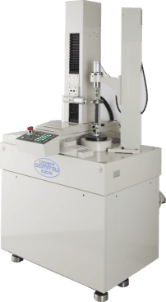
- We maintain support structures that enable us to respond rapidly to perform regular inspections, repairs, and modifications related to our products.
We also provide maintenance for older machines to the greatest extent possible.
We can also provide operating instruction and training for new operators of our measuring machines.
For overseas customers, in some regions we partner with local companies and provide support through service personnel trained by us.
- High maintainability
- Accessories, interfaces, and peripheral devices are designed to allow unit-based replacement, enabling rapid restoration of measurement with minimal part replacement when a problem occurs.
-
- Difference between periodic inspection and On-site Calibration for measuring machines
/ Periodic inspection /
We conduct inspections according to our inspection checklist using calibrated measuring instruments and determine a pass/fail judgment.
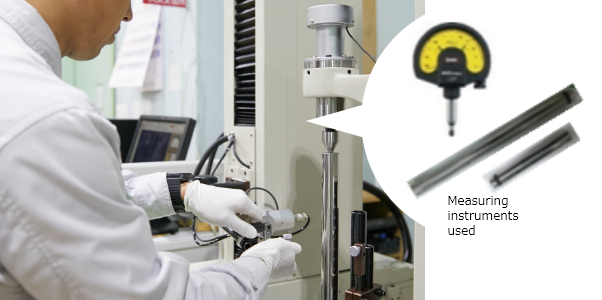

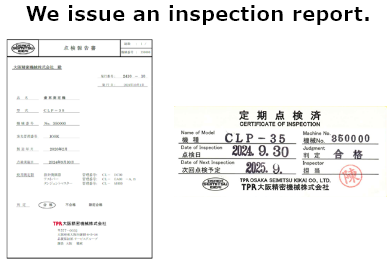
We can also issue calibration certificates and traceability diagrams for the measuring instruments used in this process.
/ On-site Calibration /
We measure calibrated gear standards in the customer’s operating environment and issue a calibration certificate.
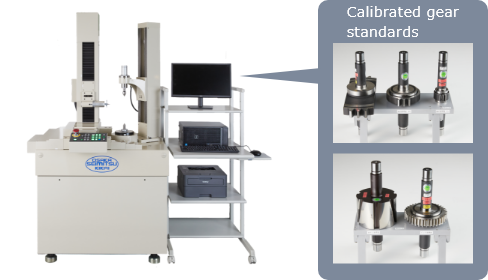

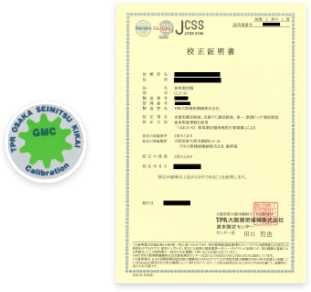
A calibration certificate is issued based on the measurement results.
The calibration results include measurement error and measurement uncertainty for profile, helix, and pitch of the gear measuring machine.
-
- How to determine inspection intervals
Inspection intervals must be determined by the user, based on the user’s own quality manual.
How to determine inspection intervals (example)
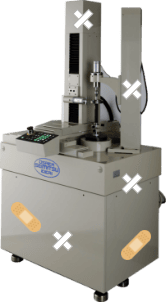
1Periodic inspection every year
-
・High usage frequency
・Poor operating environment
・Aging instrument, etc.
2Periodic inspection every 3 years
-
・In-house regular inspections, established management system
・Low usage frequency, etc.